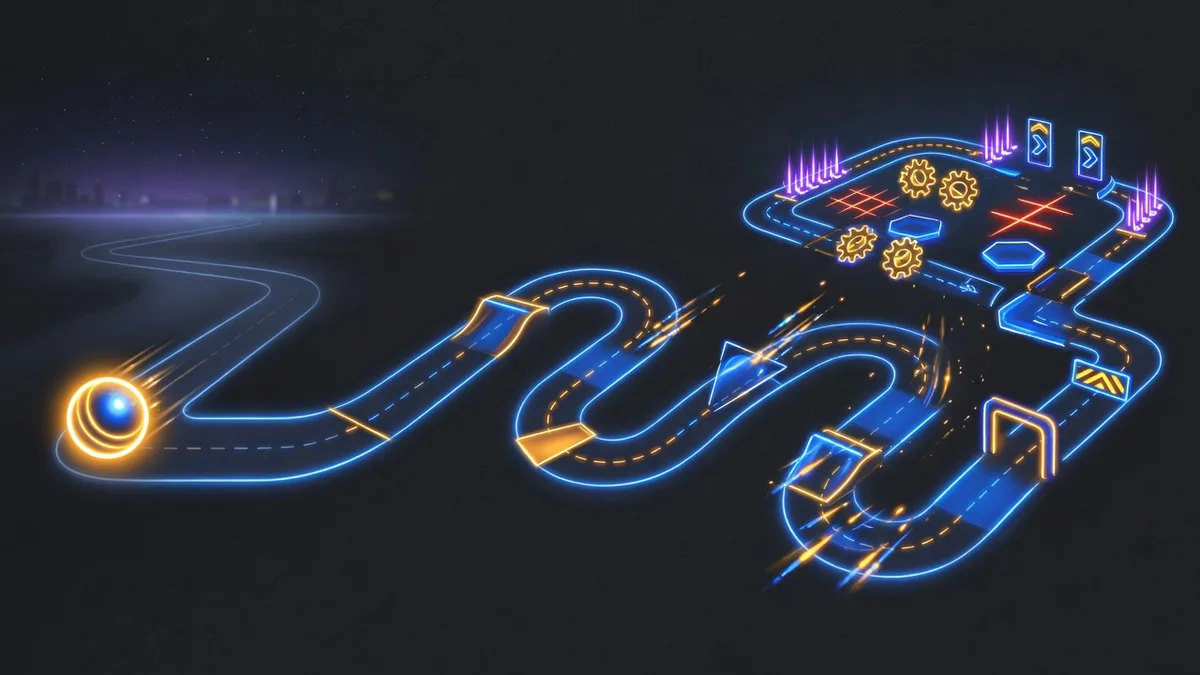
Play Tap Road free online first, then use this guide to turn practice into progress.
Welcome to the Tap Road Master Guide. This is the complete A-to-Z reference for Tap Road, the neon endless runner where you guide a glowing ball along an endless road full of obstacles and gems. Whether you just pressed Play for the first time or you have already logged hundreds of runs, this guide walks you through every layer of the game: controls, core mechanics, the speed phases that define a run, obstacle patterns, gem strategy, skin progression, advanced techniques, the mental game, and a repeatable practice routine. By the end you will have a clear roadmap for turning raw reflexes into consistent high scores.
If you only have time for one thing, start with the How to Play Tap Road guide for the absolute basics, then come back here to go deeper. For focused score advice, jump to Tap Road high score tips.
Controls: The One Input That Runs Everything

Desktop Controls
On desktop, you can use a mouse click or the keyboard input shown in the live game player. Most players find the keyboard more consistent than the mouse because a key press has a sharper, more repeatable timing. Whichever you choose, stick with one input method long enough to build muscle memory before switching.Mobile Controls
On phones and tablets, a single tap on the screen is the input. Keep the game frame fully visible, use an updated browser, and start the run from inside the player to avoid accidental scrolling. The tap target is generous, but finger placement still matters: rest your tapping finger close to the screen so each input is short and controlled. See the Tap Road mobile guide for device-specific tips.The Golden Rule of Input
Every input should be deliberate. Tapping out of panic, double-tapping to correct a mistake, or mashing the input when the road gets fast are all habits that end runs. The best players tap less, not more, because each tap is timed to the road ahead rather than reacted to the obstacle in front of them.Core Mechanics: How a Tap Road Run Actually Works
Before talking strategy, it helps to understand the systems underneath every run. Tap Road is an endless runner, which means there is no fixed finish line. Your score is a function of how long you survive and how many gems you collect along the way.The Ball and the Road
You control a glowing ball that travels forward automatically. Your only job is to steer it away from obstacles and, when it is safe, toward gems. The road is procedurally generated, so no two runs are identical, but the underlying patterns repeat in recognizable shapes. Learning to read those shapes is the core skill of the game.Scoring
Your score grows the longer you stay alive, and gems add a bonus on top of that survival score. This creates a constant tension: gems are valuable, but every detour toward a gem is a small risk. A clean, long survival run with a few safe gems usually beats a shorter run where you grabbed every collectible and crashed early.Difficulty Curve
The road does not stay the same difficulty. As your run gets longer, the game ramps up in speed and tightens the spacing between obstacles. This difficulty curve is not random; it moves through identifiable speed phases, each of which demands a slightly different approach.Speed Phases: Reading the Difficulty Curve
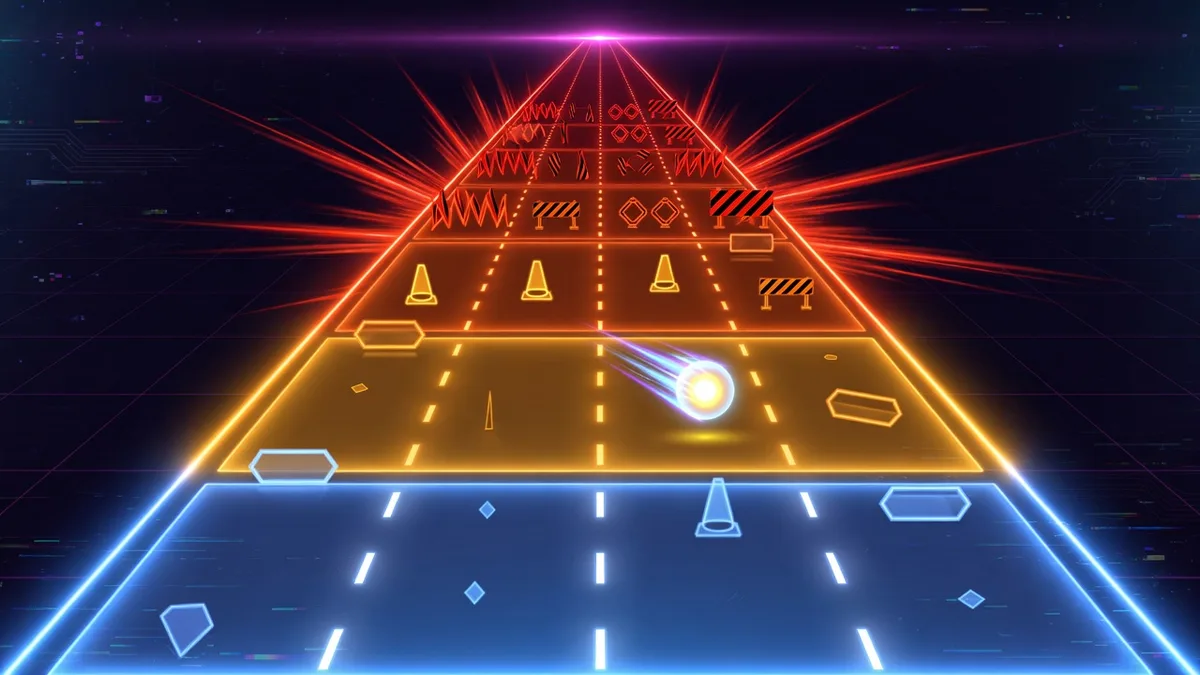
| Phase | Approx. Time | Speed Feel | Reaction Window | Main Goal |
|---|---|---|---|---|
| Warm-up | 0–15s | Slow, forgiving | Large | Build rhythm, collect easy gems |
| Cruise | 15–40s | Moderate | Comfortable | Read patterns, take safe gems |
| Acceleration | 40–75s | Fast | Tight | Prioritize survival over gems |
| High Speed | 75–120s | Very fast | Small | Minimal taps, trust peripheral vision |
| Survival | 120s+ | Maximum | Tiny | Stay calm, do not overcorrect |
Warm-up Phase
The first few seconds are the slowest the road will ever be. Use them to settle your hand, confirm your input feels right, and collect any gems that sit cleanly on your path. Do not take risks here; the warm-up is for setting a calm baseline, not for showing off.Cruise Phase
Speed is comfortable and patterns are readable. This is where you accumulate most of your safe gems and train your eyes to look ahead. Treat the cruise phase as the productive middle of your run: efficient, low-stress, and high-value.Acceleration Phase
The road starts to tighten. Obstacles arrive faster and the gaps between safe lanes shrink. This is where many players panic and crash. The fix is to shift your priority from gems to survival. If a gem requires any kind of late adjustment, skip it. Your only job in acceleration is to keep the run alive into high speed.High Speed Phase
Reaction windows are small and the road feels relentless. The key here is to tap less and trust your peripheral vision. If you stare at the ball, you will always be a beat late. Instead, soften your focus and let the ball sit at the edge of your vision while your main attention stays on the upcoming road. Fewer, earlier taps beat frantic late corrections.Survival Phase
At maximum speed the game becomes a test of nerve as much as reflex. The road is fast enough that conscious reaction is barely fast enough, so you are relying on trained instinct. The biggest enemy here is overcorrecting: a panicked double-tap kills more runs than any single obstacle. Stay calm, keep your inputs minimal, and accept that some patterns are genuinely hard. Every second you survive at this phase is valuable practice.Obstacle Patterns: Learning the Road's Vocabulary
The road is procedural, but it is built from a finite set of pattern building blocks. Once you can name and recognize them, you stop reacting to surprises and start responding to familiar shapes.Common Pattern Types
- **Single gates:** One obstacle with a clear safe lane. The baseline pattern; practice tapping once and settling. - **Staggered pairs:** Two obstacles offset so the safe lane shifts side to side. Requires two timed inputs rather than one. - **Narrow corridors:** A tight safe channel with obstacles on both sides. Precision matters more than speed here; a soft, accurate tap is safer than a hard one. - **Gem bait:** A gem placed so that collecting it forces a late or awkward move. Recognize these and leave the gem alone. - **Speed bumps:** Short bursts where the road tightens briefly then opens up again. Do not panic; the difficulty resets after the bump. - **Combo sequences:** Several patterns chained back to back. Read the whole chain as one unit instead of solving each piece individually.How to Read a Pattern
The trick is to scan ahead and identify the pattern type before you reach it. Once you know it is a staggered pair, for example, you can pre-plan two taps instead of improvising. This is the same skill as reading several moves ahead in a board game: the further ahead you read, the calmer your inputs become.Pattern Difficulty by Phase
Patterns do not just get faster; they get denser. In the warm-up phase you mostly see single gates and the occasional staggered pair. By the cruise phase, narrow corridors and gem bait appear regularly. In acceleration and beyond, combo sequences dominate, and the road chains three or four patterns together with very little breathing room between them. Knowing which patterns to expect at each phase lets you pre-load the right mental template instead of being surprised.The Recovery Pattern
One underrated skill is recognizing the recovery pattern: the brief open stretch the road gives you after a tight combo. These recovery windows are when you should reset your hand tension, take a breath, and re-center your eyes on the far road. Players who treat recovery windows as a chance to grab a stray gem often miss the reset and enter the next combo already tense. Treat recovery as recovery, not as a gem opportunity.Gem Strategy: When to Collect and When to Skip
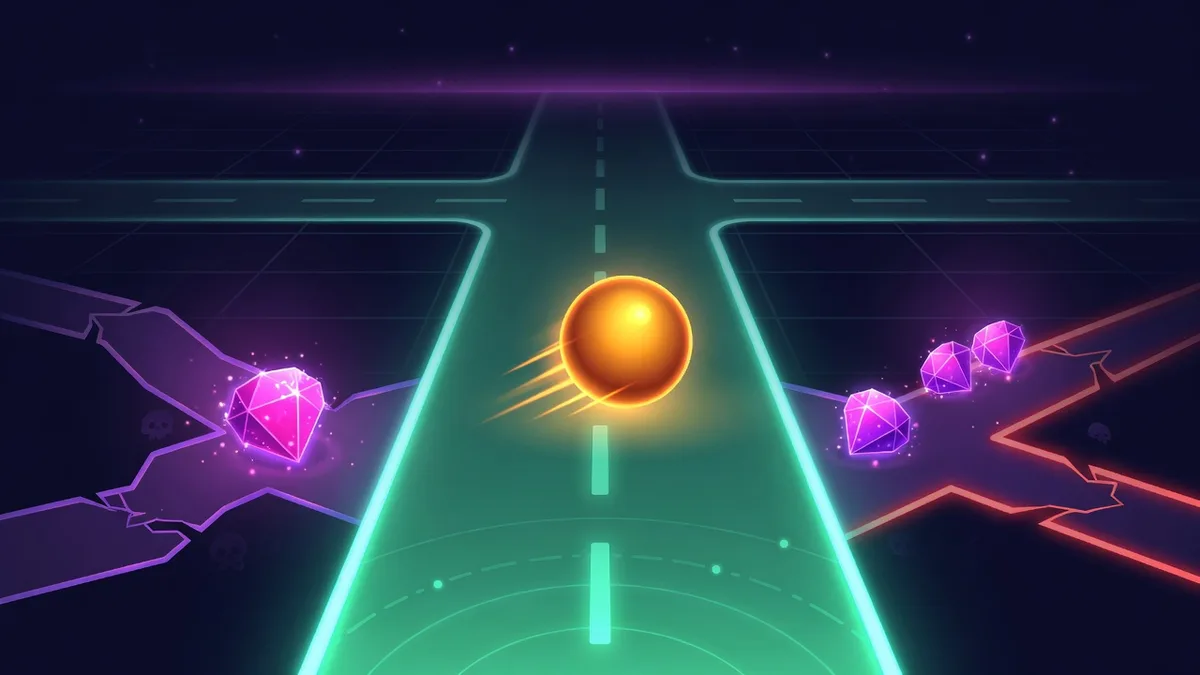
The Safe Gem Rule
Only collect a gem if it is already on the path you would take to survive. If reaching the gem requires any extra input, a late adjustment, or moving toward the edge of a safe lane, skip it. Survival score compounds over time, while a crashed run earns zero gems.Gem Risk by Speed Phase
| Phase | Gem Policy |
|---|---|
| Warm-up | Take almost all gems; risk is minimal |
| Cruise | Take gems on your path, skip detours |
| Acceleration | Take only effortless gems, skip everything else |
| High Speed | Ignore gems unless they sit directly in your lane |
| Survival | Forget gems exist; pure survival |
Long-Term Gem Farming
If your goal is to unlock skins, the most efficient approach is to prioritize long, clean runs over greedy ones. A run that lasts 90 seconds with a handful of safe gems earns more total gems than three runs that crash at 20 seconds while chasing every collectible. Patience compounds. For a full unlock plan, see the Tap Road Skin Collector's Roadmap.Skin Progression: Building Your Collection
Skins are the long-term progression system in Tap Road. They are cosmetic, but they give you something to work toward between runs and make the game feel fresh after hundreds of attempts.How Skins Unlock
Most skins are purchased with gems in the skin menu. A smaller number have secret unlock conditions tied to specific achievements or run milestones. Because gems are earned slowly, the order in which you buy skins matters.A Smart Collection Order
Rather than buying the cheapest skin each time, plan an order that keeps you motivated. A good approach is to alternate between an affordable skin and a stretch goal skin, so you always have both a near-term reward and a long-term target. Browse the full catalog on the skins page before spending anything.Skins and Visibility
One practical note: some skins are easier to see against certain road backgrounds than others. A high-contrast skin can genuinely help you track the ball at high speed, while a low-contrast skin that looks cool may make the ball harder to follow. Function over fashion is a legitimate choice when you are chasing a personal best.Advanced Techniques: Beyond the Basics
Once the fundamentals are automatic, a set of advanced techniques can push your scores further. These are covered in depth in the Tap Road Advanced Techniques guide; here are the headlines.Predictive Tapping
Instead of reacting to an obstacle, tap based on where you predict the safe lane will be. This is only possible once you can read patterns ahead, and it shaves precious milliseconds off your response time at high speed.Peripheral Vision Training
Train yourself to keep the ball at the edge of your vision while your focus stays on the upcoming road. This feels unnatural at first, but it is the single biggest unlock for surviving the high speed and survival phases.Rhythm Matching
The road has a rhythm. Staggered pairs, corridors, and combo sequences each have a cadence. Matching your tap timing to that cadence, rather than treating every input as an isolated reaction, makes fast sections feel manageable.Micro-Rest and Reset
Between patterns there are often tiny gaps where the road opens up. Use those micro-rests to reset your hand tension and breathing. A relaxed hand taps more accurately than a tense one, and a single breath between combo sequences can prevent the panic that causes overcorrections.The Mental Game: Staying Calm Under Pressure
Tap Road is as much a mental game as a reflex game. The road is designed to create pressure, and most crashes are caused by a mental wobble, not a physical limitation.Recognizing Tilt
Tilt is the state where frustration from a crash changes how you play the next run. Signs include tapping harder, chasing gems aggressively to "make up" for a lost score, and restarting instantly without thinking. When you notice tilt, stop and take a real break. One minute away from the screen resets your mindset more than ten angry restarts.Breathing and Hand Tension
A slow exhale before a hard section lowers your heart rate and loosens your hand. Loose hands tap more precisely. Many players unconsciously tense up as speed increases, which makes their taps late and jerky. Check your shoulder and hand tension at the start of each run and again whenever you enter a new speed phase.Process Over Outcome
Focus on executing your habits well, not on the number on the screen. Players who fixate on beating their high score tend to play tighter and crash earlier. Players who focus on "read ahead, tap clean, skip risky gems" tend to score higher naturally because the process produces the outcome.Managing Run Expectations
Not every run is meant to be a personal best. If you expect every session to peak, you will feel every average run as a failure, and that frustration leaks into your inputs. A healthier frame is to treat most runs as practice and let the big scores show up when the conditions line up: you are rested, focused, and the patterns are flowing. Over a week of consistent practice, your best runs will climb on their own.The Reset Ritual
Build a short reset ritual you run after every crash, no matter how small. It can be as simple as a single breath, a quick hand shake, and a one-line reminder of the habit you are working on. A reset ritual does two things: it stops a single crash from snowballing into tilt, and it keeps your intention fresh for the next run instead of carrying frustration forward.A Repeatable Practice Routine
Random play improves slowly. A structured routine improves fast. Here is a simple weekly structure you can adapt.| Day | Focus | Activity |
|---|---|---|
| Day 1 | Pattern reading | Slow runs, name each pattern out loud |
| Day 2 | Speed phases | Push into high speed repeatedly, focus on calming inputs |
| Day 3 | Gem discipline | Full runs, skip every risky gem, track survival time |
| Day 4 | Trainer work | Use the trainer to repeat specific patterns |
| Day 5 | Full runs | Play for score, apply everything |
| Day 6 | Review | Log runs in the score tracker, compare to the leaderboard |
| Day 7 | Rest or fun | Light play, no pressure, keep it enjoyable |
Why the Trainer Matters
The trainer lets you isolate patterns and speed phases so you can grind a specific weakness instead of waiting for it to appear in a full run. Ten focused minutes on a single pattern often beats an hour of unstructured play.Why Tracking Matters
The score trackerturns vague feelings into data. Instead of "I think I'm getting better," you can see whether your average survival time and gem count are actually trending up. Comparing your numbers to the leaderboard also gives you a concrete target to chase.Setting Up Your Environment
Your physical setup affects your runs more than most players realize. Tap Road rewards calm, precise inputs, and anything that adds friction to those inputs quietly lowers your ceiling.Screen and Posture
Play on the largest screen you comfortably can, with the game frame centered at eye level so you are not craning your neck. A neutral posture keeps your shoulders relaxed, which keeps your tapping hand relaxed. Hunching over a phone for an hour builds tension that shows up as late, jerky taps in the high speed phase.Input Device Choice
On desktop, a mechanical keyboard with a light actuation force is ideal because each tap is crisp and repeatable. A mouse works too, but be aware that click travel adds a small amount of latency compared to a key. On mobile, a clean screen with no smudges and a dry fingertip gives the most consistent tap response.Distractions and Focus
Close extra browser tabs, silence notifications, and avoid playing in a noisy environment when you are trying for a serious score. Tap Road demands sustained attention, and a single glance away at the wrong moment can end a run that was on pace for a personal best. Treat a score attempt like a short, focused sprint, not background play.Common Mistakes at Every Level
- **Beginner:** Staring at the ball, tapping late, chasing every gem. - **Intermediate:** Panicking in the acceleration phase, overcorrecting with double-taps, buying skins randomly. - **Advanced:** Ignoring tilt, skipping warm-up runs, neglecting the trainer in favor of only full runs. Whatever your level, the fix is usually the same: simplify your focus, pick one habit to improve, and practice it deliberately until it is automatic.Putting It All Together
A great Tap Road run is the product of many small decisions stacked together: a clean warm-up, disciplined gem choices in the cruise phase, a calm shift to survival in acceleration, trust in your peripheral vision at high speed, and steady nerves in the survival phase. No single technique carries a run. The players at the top of the leaderboard are not necessarily faster than you; they are more consistent, and consistency comes from practicing the fundamentals deliberately. Start with the basics, layer in the score tips, drill your weak spots with the trainer, track your progress, and work through the skin roadmap and advanced techniques guides as you grow. Do all of that, and the gap between beginner and pro closes one clean run at a time.Try These Tools
View all tools →Reaction Trainer
Reflex mini-game with difficulty tiers and session history
Score Tracker
Log runs, see progress curves, export your history
Leaderboard
Global high scores and daily challenge rankings
How to Play
Controls and beginner habits
High Score Tips
Survive longer and score higher
Safe Play
Browser loading tips, no downloads
Skin Encyclopedia
Browse ball skins, track your collection
Community
Share high-score screenshots and vote